DuplexFilters.comContact

Continuous Flow. No Shutdowns. Serviced Live.

Duplex Filters for Systems That Can't Stop

Heavy-duty duplex filter housings for hydraulic power units, lube oil skids, marine fuel lines, and chemical process service. Change elements while the line runs — no shutdown, no lost flow.

2
filter chambers
0
minutes downtime to change out
1 to 200
micron typical range
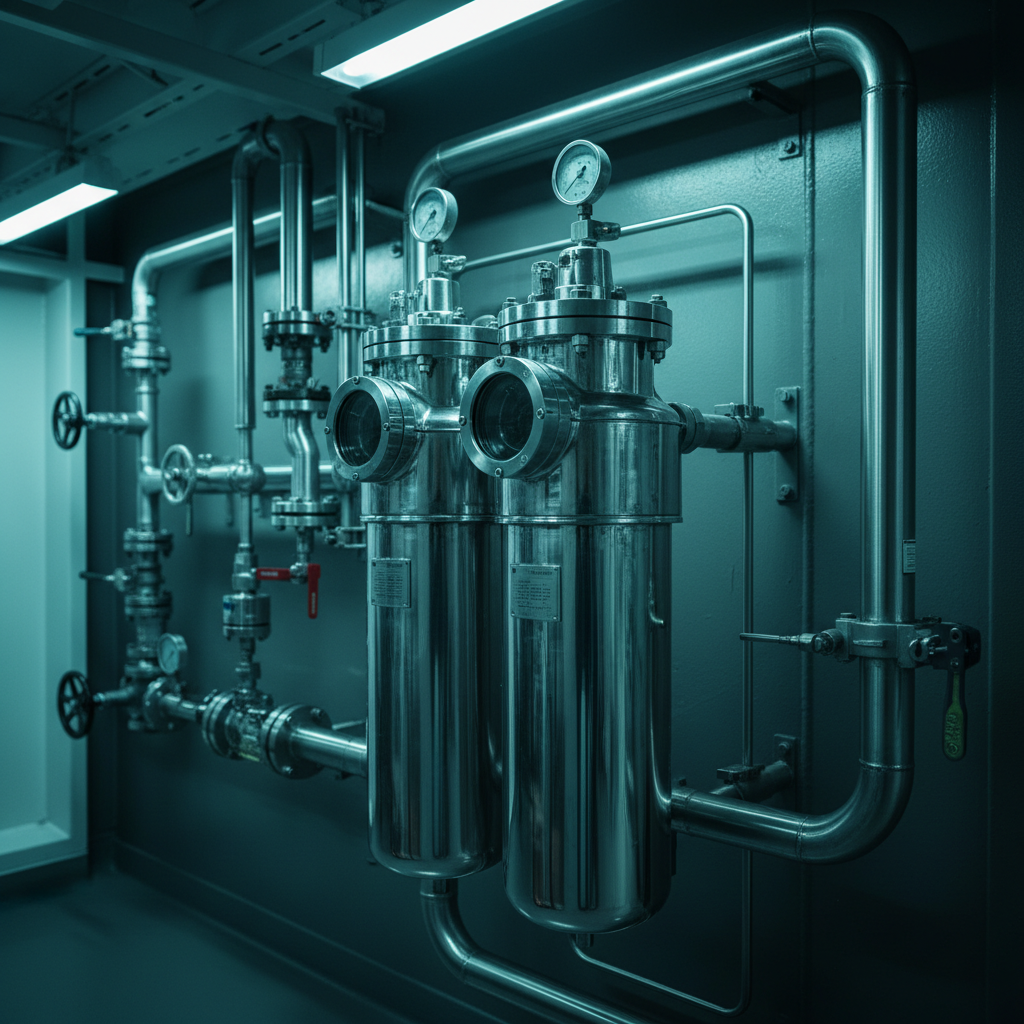
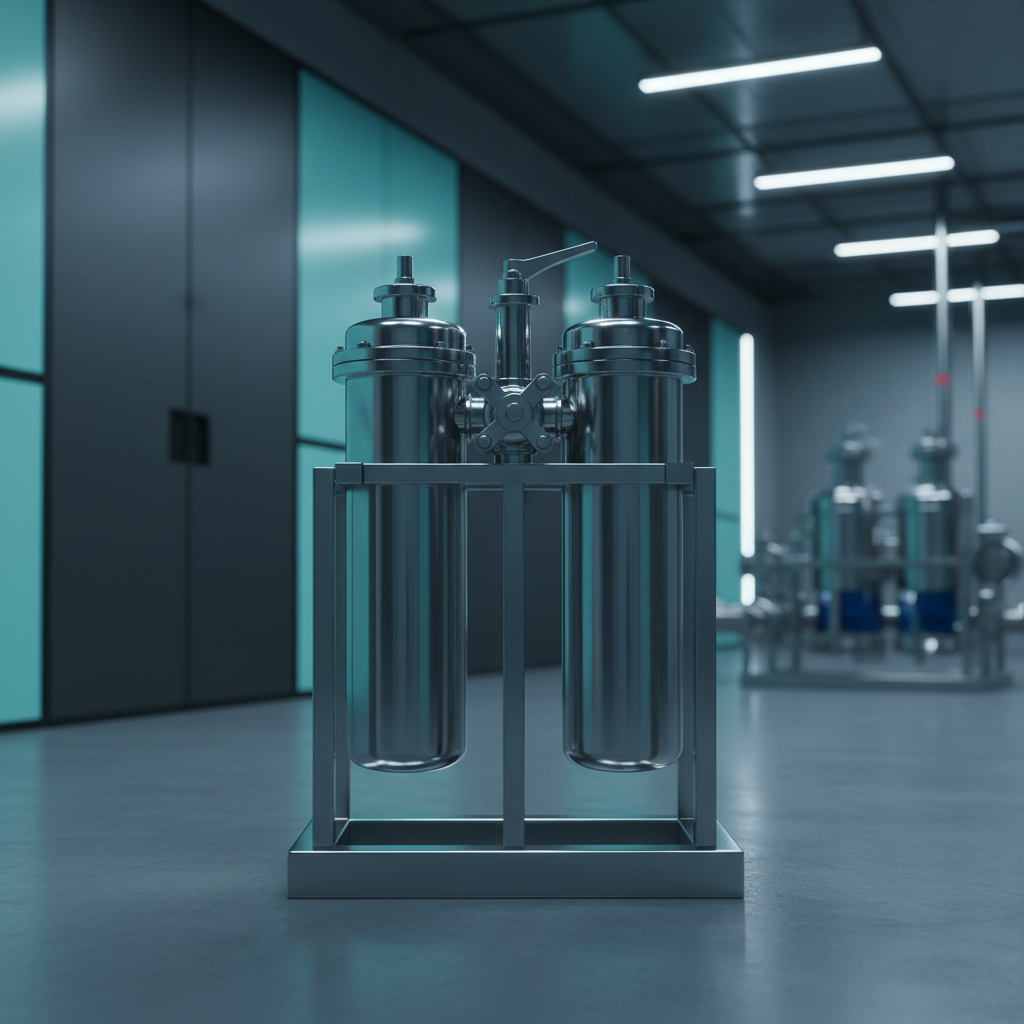
Twin-chamber stainless steel duplex filter housing with a central six-port change-over valve mounted on an industrial process skid

The fundamentals

What a duplex filter actually is

A duplex filter is two filter chambers plumbed to a common inlet and outlet through a change-over valve. At any moment one chamber is the duty side carrying full flow, and the other is the standby side, isolated and idle. The elements themselves are ordinary: the same pleated cartridges, mesh screens or baskets a single-chamber housing would take. What the duplex arrangement buys is the ability to take one chamber out of service without taking the system out of service.

That single capability is the reason duplex housings exist and the reason they cost more. On a system that runs continuously, a filter element is a consumable that has to be replaced on a machine that is not allowed to stop. A simplex housing forces a choice between shutting down and running unfiltered. A duplex housing removes the choice: rotate the handle, isolate the loaded side, change the element, and put it back on standby.

Practically, this changes how maintenance is planned. Element change-out stops being an outage task scheduled around production and becomes a routine round the operator can do during normal running, on the differential reading rather than the shutdown calendar.

Duty chamber

The side currently carrying flow. Its element loads with contaminant and its differential pressure climbs over time.

Standby chamber

Isolated, holding a clean element, ready to take flow. Kept filled and vented so it can be brought online without an air slug.

Change-over valve

The multi-port valve that redirects inlet and outlet together, transferring flow from one chamber to the other.

Differential indication

A gauge, pop-up indicator or electrical switch reading the pressure drop across the duty element. It is what tells you when to change over.

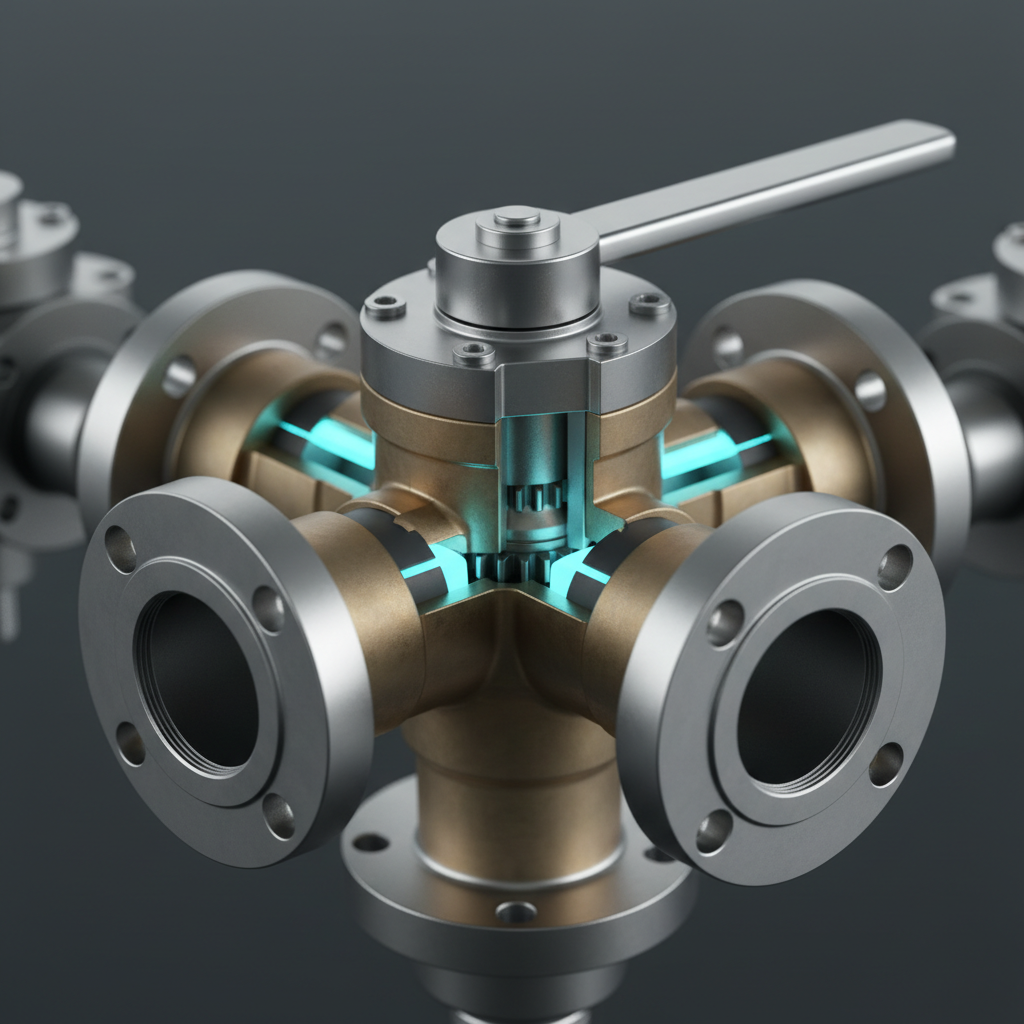
Close detail of a bronze and stainless six-port change-over transfer valve lever on a duplex filter manifold

The mechanism

How change-over and transfer valves work

The change-over valve is what separates a duplex housing from two filters bolted next to each other. It is a multi-port valve, commonly a six-port plug or ball design, that handles both the inlet and the outlet in one movement. Rotating the handle simultaneously opens the standby chamber to the inlet and connects it to the outlet, while closing the duty chamber off from both.

The detail that matters is what happens mid-rotation. A well-designed valve passes through an overlap position where both chambers are open to flow, so at no point is the line restricted or interrupted. Cheaper or worn designs can momentarily throttle the passage, which shows up downstream as a pressure dip. On a servo-hydraulic or bearing lube circuit that dip is not acceptable, so overlap behavior belongs in the specification.

Change-over sequence

  1. 1Confirm the standby chamber holds a clean element and the cover is correctly torqued.
  2. 2Fill the standby chamber through its fill port and vent it until fluid appears at the vent, so it enters service full rather than dry.
  3. 3Rotate the change-over handle steadily and fully. Do not stop part way, and do not leave the handle between positions.
  4. 4Verify flow and downstream pressure are stable and that the differential now reads clean-element values.
  5. 5Isolate, depressurize and drain the off-duty chamber, then confirm zero pressure at the vent before opening the cover.
  6. 6Replace the element, inspect and reseat the cover seal, close up, and leave the chamber ready as the new standby.

Specification decision

Duplex vs simplex vs basket strainer

These three get specified interchangeably and they should not be. Simplex and duplex differ on whether servicing requires a shutdown. Filter and strainer differ on how fine the job is. The right answer is usually driven by the cost of an hour of downtime and the cleanliness the downstream equipment actually needs.

ConsiderationDuplex filterSimplex filterBasket strainer
ChambersTwo, each with its own elementOneOne (basket style, single or duplex bodies exist)
Service without shutdownYes, by change-over to the standby sideNo, the line must be stopped or bypassedOnly if a duplex strainer body is used
Typical filtration rangeRoughly 1 to 200 micron with cartridge or mesh elementsSame range, single chamberCoarse, roughly 40 micron to 1/4 in. perforation
Primary jobContinuous fine filtration on duty-critical linesFine filtration where downtime is acceptableBulk debris removal, protecting pumps and valves
Element cost per changeHigher: cartridges are consumableHigher: cartridges are consumableLow: baskets are cleaned and reused
Footprint and costLargest and most expensiveCompact, lowest costModerate

Choose duplex when

The line runs continuously, a stop is expensive or unsafe, or a class rule or process requirement says filtration must stay in service during element change.

Choose simplex when

There is a natural window to stop the line, the duty cycle is intermittent, or budget and space rule out a second chamber and a change-over valve.

Choose a strainer when

The job is bulk debris, not fluid cleanliness. Reusable baskets on raw water, cooling water and pump suction lines, often upstream of a finer filter.

Where they are used

Applications by service

The mechanism is the same across industries. What changes is pressure, temperature, fluid chemistry and how fine the filtration has to be, and those four drive nearly every difference between one duplex housing specification and the next.

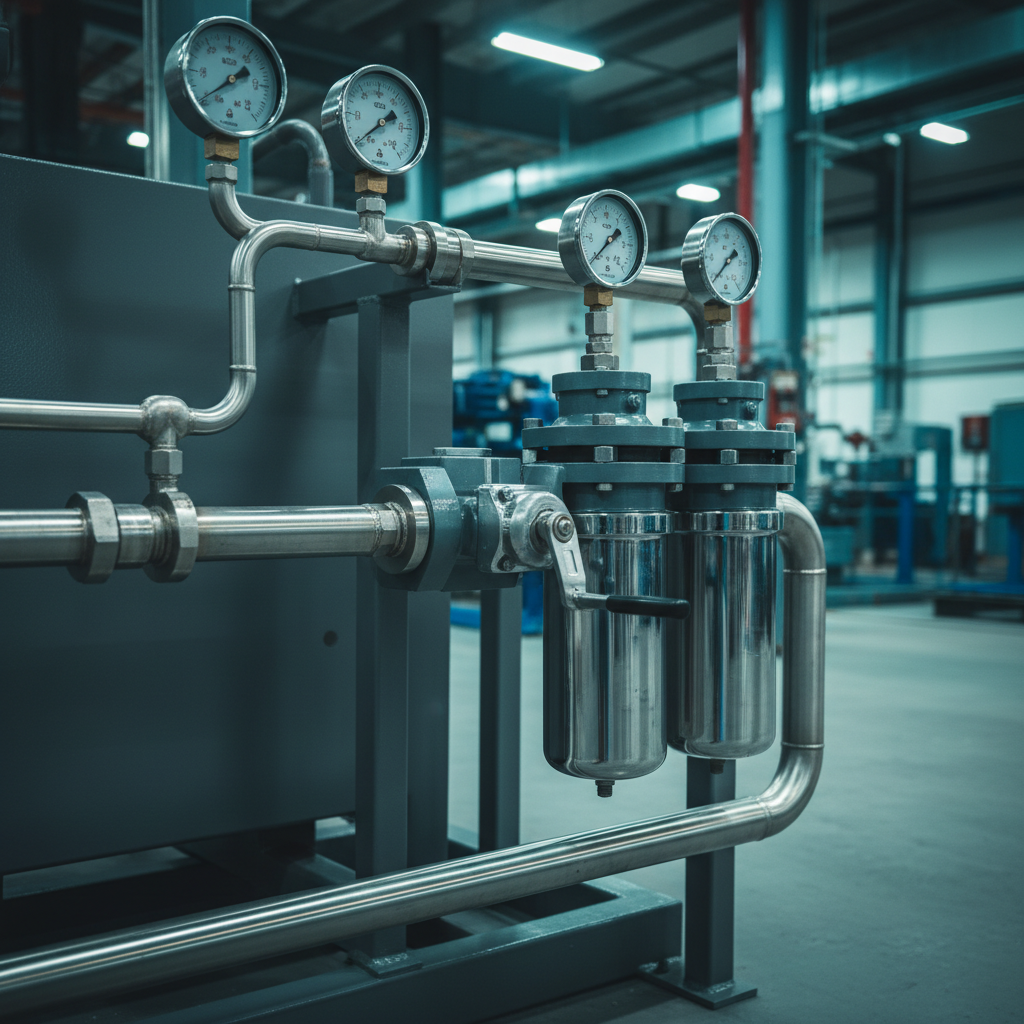
Hydraulic power unit skid with steel piping, pressure gauges and an inline duplex filter assembly

Hydraulic systems

Pressure-line and return-line duplex filters protect servo valves, proportional valves and pumps, where a single hard particle at the wrong clearance can score a spool. Because a hydraulic system rarely tolerates a stop for a filter change on production equipment, duplex housings let the element come out mid-shift.

  • Pressure line duty typically 3,000 to 6,000 psi, so housings are forged or heavy-wall
  • Fine ratings of 3 to 10 micron are common to hold the target ISO 4406 cleanliness code
  • Differential indicators are near-mandatory since a blinded element can starve the pump
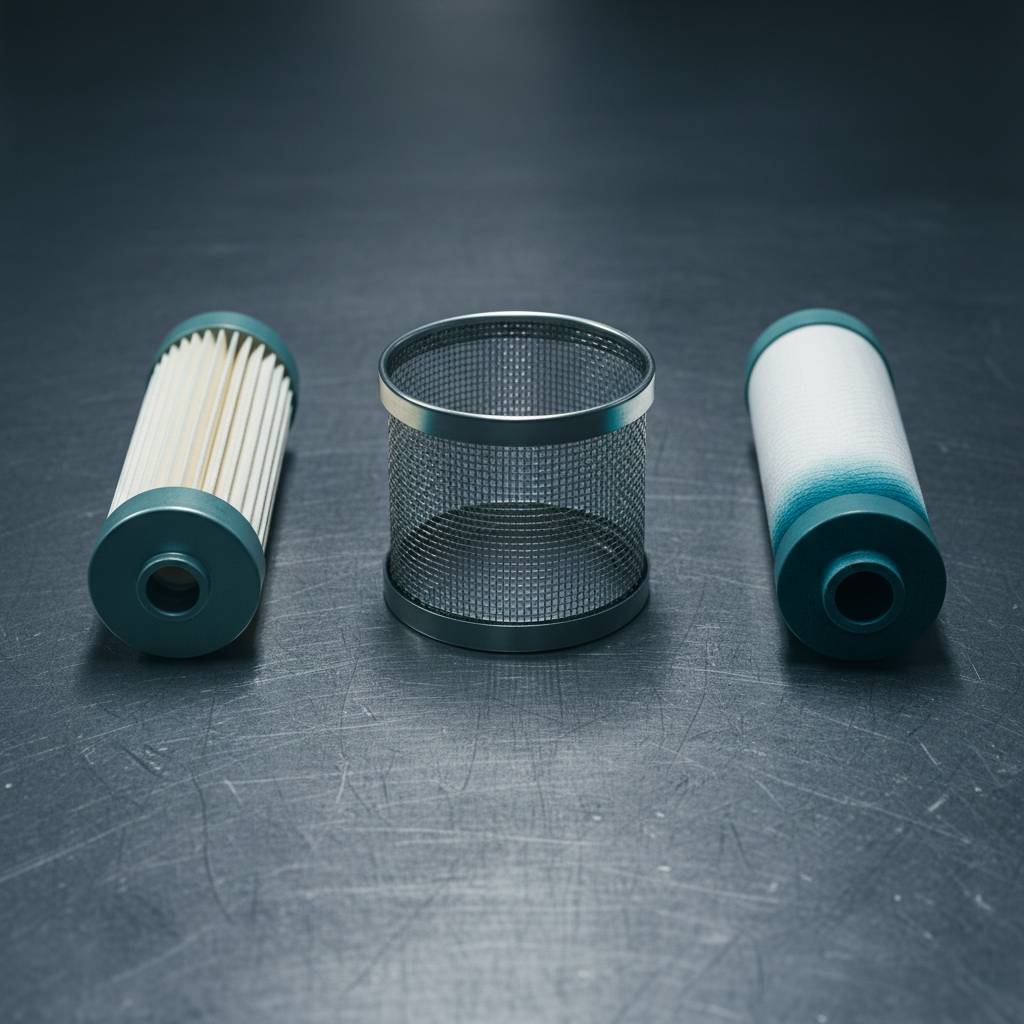
Pleated cartridge, wire mesh basket element and wound depth cartridge arranged on a workbench

Lube oil and turbine oil

Turbine, compressor and large gearbox lube skids run continuously for months between outages. Duplex filters are the standard here for exactly that reason: the element is a wear item on a machine that is not allowed to stop. Change-over is performed on differential pressure while the machine stays on load.

  • Continuous duty at moderate pressure, commonly 50 to 300 psi
  • Ratings of 5 to 25 micron depending on bearing and gear clearances
  • Often specified with no bypass so no unfiltered oil can reach the bearings
Marine engine room fuel treatment line with a stainless duplex fuel filter housing and sight glasses

Marine and fuel

Engine room fuel and lube service is the classic duplex application, and class rules generally require that filtration on a propulsion or generator fuel line can be serviced without stopping the engine. Water separation, sludge from heavy fuel and tank sediment all load elements unpredictably, so a standby chamber is the safety margin.

  • Housings usually stainless or bronze for seawater and fuel compatibility
  • Sight glasses and drain valves for water and sludge checks
  • Steam or electric jacketing on heavy fuel oil service to hold viscosity
Macro view of a six-port change-over transfer valve handle on an industrial filter manifold

Chemical and process fluids

Batch and continuous chemical processes use duplex housings on catalyst removal, polish filtration before packaging, and resin or coating lines. Material selection dominates the specification: the wetted metallurgy and every elastomer must be compatible with the fluid at operating temperature, not just at ambient.

  • 316L stainless, Hastelloy, or lined carbon steel depending on the fluid
  • Seal choice among Buna-N, EPDM, Viton and PTFE drives the compatibility envelope
  • Sanitary and clamp connections where the process demands cleanability
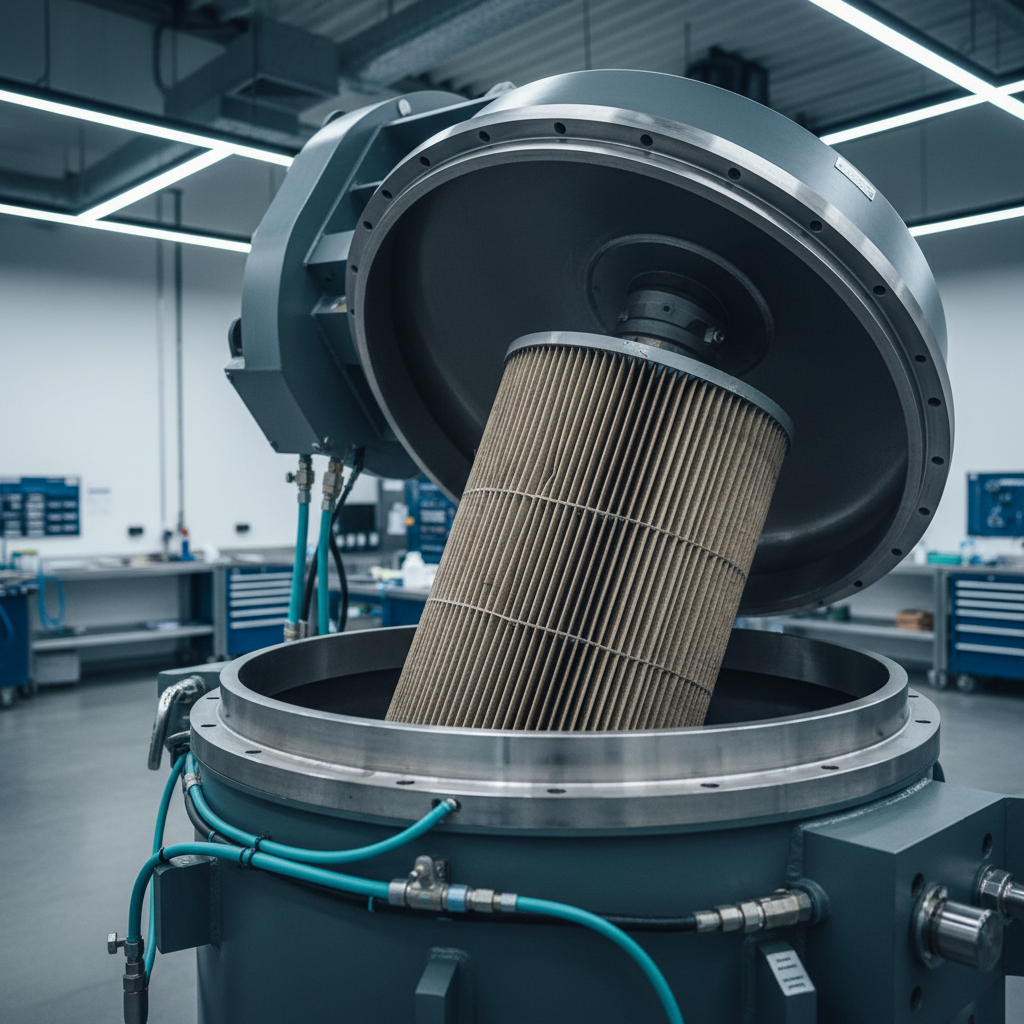
Opened industrial filter vessel with the cover swung aside on its davit arm and an element being lifted out

Water treatment

Municipal and industrial water plants place duplex housings ahead of membranes, UV trains, nozzles and heat exchangers. Pre-filtration is protective rather than product-defining, so ratings are coarser, but a plant supplying a process or a distribution network cannot pause for a cartridge change.

  • Coarser ratings of 20 to 100 micron ahead of membranes and heat exchangers
  • Epoxy-coated carbon steel or stainless housings depending on water chemistry
  • Large flow rates favor multi-cartridge or basket-style duplex vessels

Getting the spec right

Six criteria that decide the selection

Most duplex filter problems in the field are specification problems that were locked in at purchase. Work through these six before the order goes out, because an undersized housing or an incompatible seal cannot be corrected by a better element.

01

Flow rate

Size on the maximum sustained flow, not the average. Undersizing shows up as high clean differential pressure and short element life because the media is pushed past its intended flux rate. Check the manufacturer's flow curve for your actual fluid: a housing rated for water will show a very different curve on 320 cSt gear oil.

02

Operating pressure and temperature

The housing must carry maximum working pressure plus surge, at the maximum operating temperature, since pressure ratings de-rate as metal gets hot. Confirm whether the vessel needs to be code-stamped for your jurisdiction, and check the collapse rating of the element itself, which is often the weaker link.

03

Micron rating and efficiency

A micron number means nothing without the efficiency behind it. Nominal ratings are a loose average with no guaranteed capture; absolute or Beta-rated media is tested to a standard such as ISO 16889, where Beta 1000 at 10 micron means 99.9 percent of particles at and above 10 micron are captured. Specify the beta ratio, not just the micron number.

04

Housing material

Carbon steel is the economical default for oils and fuels. 316 stainless handles corrosive service, washdown and most chemicals. Bronze remains common in marine and raw water. Lined or exotic alloys appear where the fluid attacks stainless. Match the housing to the fluid, the ambient environment and the cleaning regime.

05

Seal compatibility

Seals fail before housings do. Buna-N covers petroleum oils and fuels cheaply. Viton handles higher temperatures and aggressive chemicals. EPDM suits water, steam and phosphate ester fluids but is destroyed by petroleum oil. PTFE is broadly inert. Verify every elastomer in the change-over valve as well, not only the vessel cover gasket.

06

Connections and indication

Match the port style and size to the piping, keeping in mind that a housing with ports smaller than the line will throttle it. Then decide on indication: a differential pressure gauge, a visual pop-up indicator, or an electrical switch wired to the control system so a loading element raises an alarm before it becomes a change-over emergency.

Consumables

Element types and change-out intervals

A duplex housing is a long-lived asset. The elements inside it are the recurring cost, and the element type decides both the filtration performance and the maintenance economics.

Element typeTypical rangeCharacteristicsChange-out trigger
Pleated cellulose or synthetic media1 to 40 micronThe workhorse cartridge for oils and fuels. High surface area in a compact form gives good dirt-holding at low clean differential pressure. Disposable, so it is a recurring consumable cost.On differential, typically 15 to 25 psid
Wire mesh or sintered metal10 to 200 micronCleanable and reusable, tolerant of high temperature and high differential pressure. Lower dirt-holding capacity than pleated media, so it is favored where debris is coarse or where a disposable element is impractical.Clean at differential, replace when damaged or blinded
Wound or depth media1 to 100 micronDepth construction traps particles through the thickness of the media rather than on one surface, which suits gelatinous or high-solids loading that would blind a pleated element quickly.On differential, generally shorter life on heavy solids
Basket screens40 micron to 1/4 in. perforationCoarse bulk-debris removal ahead of finer stages. Cleaned and reinstalled rather than replaced, which is why duplex basket strainers are common on raw water, cooling water and sea water lines.Clean on schedule or on differential, whichever comes first

Change on differential pressure, not on the calendar

Record the clean differential at normal operating flow and temperature the day a new element goes in. That number is the baseline. Change out when the differential reaches the manufacturer's stated limit for the element, commonly 15 to 25 psid on cartridge media. Two rules keep this honest: always read at operating temperature, because cold viscous fluid inflates the reading, and log the reading rather than eyeballing the gauge, because the rate of climb tells you about the system long before the limit is reached.

In the field

Installation and maintenance practice

A correctly specified duplex filter still underperforms if it is installed where nobody can reach it or maintained without a baseline. These are the practices that separate housings that run for decades from housings that become a recurring work order.

Industrial filter vessel opened on its davit arm with a spent pleated element being lifted out during servicing

Leave room to actually service it

The element has to come out vertically, and the cover needs swing clearance for its davit or eyebolts. Confirm the extraction height and handle arc against the surrounding steelwork before the housing is fixed in place. A housing you have to partly dismantle piping to service will quietly stop being serviced.

Install isolation, drains and vents on both chambers

Each chamber needs its own drain to depressurize and empty, and its own vent to fill and prove zero pressure before the cover comes off. Piping both chambers to a common drain header with individual valves keeps the job clean and prevents draining the wrong side.

Baseline the differential on day one

Record clean differential at normal flow and temperature for every new element type. Without a baseline the change-out limit is guesswork and a slowly rising trend that signals an upstream problem will be invisible.

Alternate the duty side

Do not leave the same chamber on duty indefinitely. Rotate through both so seals, valve internals and indication on the standby side stay exercised. A standby chamber that has not moved in two years is not a standby chamber, it is an untested assumption.

Inspect the seal, do not just reuse it

Cover seals are cheap and are the most common source of weeping and air ingress. Inspect the seal and its groove at every element change, and replace on any sign of flattening, hardening, nicks or chemical attack. Torque the cover to the stated pattern and value rather than by feel.

Treat rising differential as a symptom

If element life keeps shortening, the filter is reporting a problem elsewhere: ingress through a breather or seal, water in the fluid, a failing component shedding wear metal, or a fluid past its service life. Analyze the used element and the fluid. Filtration should be catching a steady background load, not an active failure.

Common questions

Duplex filter FAQ

What is a duplex filter?

A duplex filter is a filter assembly with two independent filter chambers joined by a change-over valve. Flow is routed through one chamber while the other sits isolated on standby. When the duty element loads up, the change-over valve transfers flow to the standby side so the loaded element can be removed and replaced without shutting the system down.

How does a change-over valve work?

A change-over or transfer valve is a multi-port valve that sits between the two chambers and redirects the inlet and the outlet simultaneously. Rotating the handle sweeps flow from the duty chamber to the standby chamber. Better designs pass through a brief overlap position where both chambers carry flow, so there is no interruption and no pressure spike during the transfer.

Do I need to vent and fill the standby side before changing over?

Yes. The correct sequence is to fill and vent the standby chamber before the transfer so it goes into service full of clean fluid rather than air. Transferring into a dry chamber pushes an air slug downstream and can cause a pressure dip, cavitation at the pump, or an air lock. Most housings include a fill port and a vent for exactly this reason.

Duplex filter or duplex strainer, which do I need?

The distinction is the fineness of the job. A duplex strainer uses a cleanable basket for coarse bulk debris, typically down to about 40 micron, and protects pumps and valves from trash. A duplex filter uses a finer cartridge or media element, typically 1 to 40 micron, and controls fluid cleanliness to a target code. Many systems run a strainer upstream and a filter downstream.

When should the element be changed?

Change on differential pressure, not on the calendar. Record the clean differential at normal flow and temperature, then change when the differential reaches the manufacturer's stated limit, commonly 15 to 25 psid for cartridge elements. A time-based schedule is a fallback for systems with no differential gauge, and it either wastes element life or misses an early blinding event.

Why does the differential reading jump when the oil is cold?

Differential pressure tracks viscosity, so a cold start on a heavy oil can read near the change-out limit on a clean element. Always take the reading at normal operating temperature, and treat cold-start differential as a separate baseline. Reading it cold is the most common cause of elements being thrown away with most of their life left.

Does a duplex filter need a bypass valve?

It depends on what the filter protects. On lube oil and hydraulic circuits a bypass protects the pump and downstream equipment from starvation if an element blinds, at the cost of letting unfiltered fluid through. On fine process and fuel polishing duty where contamination is unacceptable, systems are often specified with no bypass and rely on differential alarms plus the duplex change-over to keep flow clean.

Can both chambers run at once?

Some change-over valves have a both-in-service position that halves the velocity through each element and roughly doubles capacity. It is useful for a temporary flow increase, but it defeats the point of the design, because now there is no standby chamber and no way to service without stopping. Treat it as an exception, not a normal operating mode.

How much pressure drop should a clean duplex filter have?

A well-sized housing and element should show a low clean differential at rated flow, typically a few psi, with the exact figure taken from the manufacturer's flow curve for your fluid and viscosity. If a new element reads high on day one, the housing or element is undersized for the flow, and the element will reach its change-out limit far sooner than it should.

What causes short element life?

In order of frequency: an undersized housing pushing media past its intended flux rate, an upstream source of ongoing contamination that filtration is masking rather than fixing, water in the fluid causing the media to swell, a micron rating finer than the application actually requires, and change-out decisions based on a cold differential reading. Fix the source before buying finer elements.

Talk to someone

Send your duty conditions and get a straight answer

Sizing a duplex housing well takes five numbers and a fluid name. Send the flow rate, operating pressure, operating temperature, fluid and viscosity, and the cleanliness target or micron rating you are working to, and your inquiry will be routed to a specialist who works in that service.

  • Flow rate at maximum sustained conditions
  • Operating and maximum pressure, plus surge if known
  • Operating temperature range
  • Fluid, viscosity and any water or solids loading
  • Target micron rating, beta ratio or ISO cleanliness code
  • Connection style and size, and any code stamp requirement

Interested in the domain rather than the filters?

DuplexFilters.com, the exact-match .com for this category, is available for acquisition together with this website.

See acquisition details

Your details are used only to respond to this inquiry. They are not sold or added to a marketing list.